
Winter 2026 Field Notes

WCEE collaborates across sectors — including community organizations, businesses, tribal institutions, agencies and schools — to increase equity and collective capacity in environmental education.

Nooksack River Delta by John D'Onofrio
Dear WCEE Community,
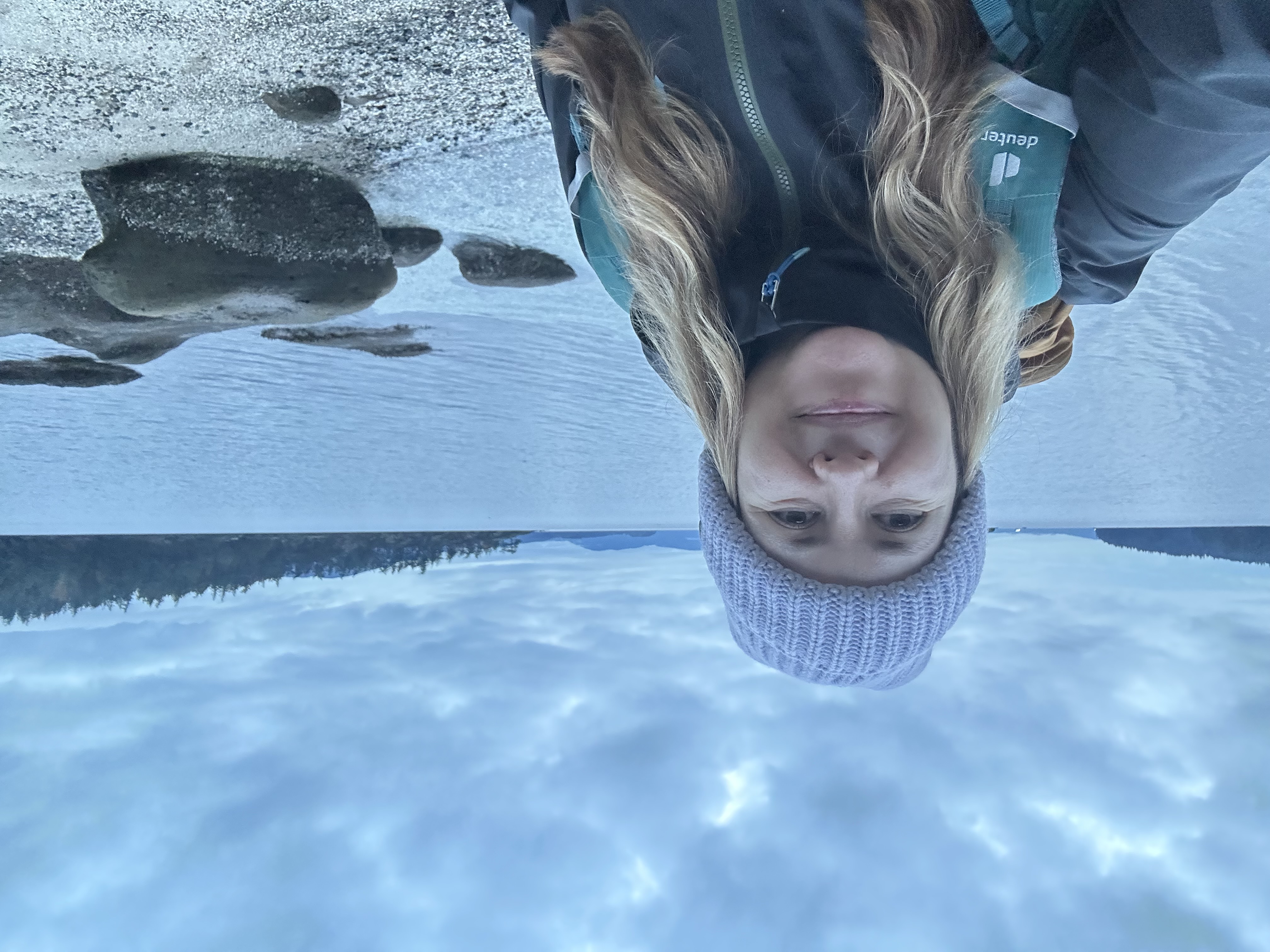
As we find ourselves more firmly landing in 2026, I’ve been reflecting on my first year serving as Lead Program Consultant for WCEE — not only on what we’ve accomplished together, but on what I’ve had the privilege to observe across this coalition.
For those I haven’t had the privilege to meet yet, my name is Kirsten Anderson. I come from Croatian, Norwegian, and European ancestors and was born and raised in Montana on the lands of the Niitsitapi (Blackfeet) and Salish Peoples. That big sky country shaped my understanding of interconnectedness to land and community, and it continues to be a great teacher in my life and work.
For the past 20+ years, I’ve called the Pacific Northwest home — first arriving to study art and french and play soccer at Western Washington University, and now living where mountains meet ocean, on the lands of the Lummi Nation, the Nooksack Indian Tribe, and Coast Salish Peoples. I often describe myself as a person of salt and stone — made by the mountains and shaped by the sea — and that sensibility deeply informs how I approach this work.
In this role, I bring together my love of systems thinking, facilitation, and nonprofit management with an artist’s way of noticing patterns, stories, and relationships. I hold an MBA in Interdisciplinary Enterprise Management and a BA in French and Fine Arts from WWU. I've spent the last 15 years doing social impact work in Whatcom County and currently hold dual contract roles with Whatcom Community Foundation as the WCEE Program Lead and as a grants and communications consultant primarily supporting The Millworks Project. I am also a proud board member of the North Cascades Audubon Society, where I've served for the past 8 years. At the heart of my service is a commitment to work that is relational, place-based, and rooted in care.
This past year has carried real weight. Many of us have navigated funding uncertainty, capacity strain, and the emotional labor of serving young people and communities amid ongoing change. I’ve come to think of this work as field-based — something you learn by listening closely, walking alongside others, and paying attention to what persists even in difficult conditions. What follows are a few observations from my field journal this year:
🔍 Observation 1: Connection is not a “nice to have” — it is core infrastructure
Across the WCEE Community of Practice and the sub-committee workgroups (Connections and Snow to Sea), I consistently witnessed how vital trusted relationships are to this work. When time and resources are tight, it is often connection — not programming — that sustains people.
Partners showed up not just to coordinate logistics, but to make sense of changing conditions together, to share tools, and to ask honest questions about what is realistic and aligned right now. Again and again, I heard that simply having a space to think aloud with others who understand the context was grounding. These moments may not always yield immediate solutions, but they create the conditions for insight, care, and long-term collaboration to better serve future generations of Whatcom County.
🌱 Observation 2: Resilience shows up as adaptation, not endurance
What stood out to me this year was how often resilience looked like adjusting expectations, slowing down, or reimagining success. Rather than pushing through at all costs, many partners chose to focus on depth, relevance, and sustainability — especially in place-based work with young people and educators.
The annual reports we’re sharing alongside this letter reflect this shift. They tell a story not of linear growth, but of learning systems — relationships strengthening over time, programs evolving in response to community needs, and partners staying committed even as circumstances change.
🧭 Observation 3: There is a growing appetite to move beyond scarcity narratives
Throughout the year, I noticed a quiet but consistent desire to move past scarcity mindsets, deficit-based language and compliance-driven storytelling. Partners expressed curiosity about how we might better name what is working, how relationships generate value, and how shared learning can be part of sustainability — not an extra burden. This desire doesn’t ignore the real constraints we face such as state funding losses. Rather, it reflects a readiness to hold complexity while also making room for imagination and possibility.
As we look ahead to 2026, WCEE remains committed to being a place where this kind of reflection, connection, and learning can continue. In that spirit, we are offering a new peer-learning support group, called The Abundance Project, focused on exploring abundance, relationship, narrative change, funding-focused storytelling, and collective capacity. This 6-month peer learning journey will be co-facilitated by Ted Lord (family foundation advisor and organizational consultant) and myself and made possible through the support of the Whatcom Community Foundation. You can learn more and RSVP here.
Thank you for welcoming me into this community and into this shared ecosystem of learning and care. What this year has made clear to me is that being in community means recognizing our interdependence — that none of us do this work alone, and that our collective capacity to care for place, for young people, and for one another is what allows this ecosystem to endure and evolve.
With gratitude,
Kirsten Anderson
Lead Program Consultant
Whatcom Coalition for Environmental Education
Coalition Updates

Snow School at Mount Baker by North Cascades Institute
Our Winter Quarter Community of Practice meeting will be held Friday, February 27th, exact time and location to be announced, but please save the date
2024-2025 Snow to Sea and Connections Annual Reports are now available, please share these stories of impact far and wide
Interested in joining the WCEE Advisory Committee - see below for more information
NEW - PEER LEARNING SUPPORT GROUP STARTS IN FEBRUARY! The Abundance Project: Cultivating Collective Possibility Friday, February 6th
3PM - 5:30PM Whatcom Community Foundation1500 Cornwall Ave., Suite 202 Bellingham, WA 98225 *light snacks and refreshments provided The first monthly gathering of a 6-month long peer-learning adventure exploring themes of abundance, relationship, equity and belonging, narrative change, collaborative storytelling and impact, and collective capacity-building, will begin in February. The first and last sessions (February and July 2026) will be held in-person with online offerings monthly in between (March - June 2026). This peer-learning support group will be co-facilitated by Ted Lord (philanthropy advisor, past nonprofit executive, and organizational consultant) and Kirsten Anderson and will feature special guest speakers each session. Our first guest speaker will be Mauri Ingram, President and CEO of the Whatcom Community Foundation!This peer-learning support group is size limited and active workgroup members will be prioritized. Please RSVP online here.
Upcoming Opportunities

Whatcom County Farm beneath Mount Baker by Dave Walker
Blue Sky Funders Forum Webinar, "Nature = Narrative: Messages that Bridge Nature, Health and Climate," Tuesday, January 27th 12PM - 1:15PM PST, register for free online
Whatcom Community Foundation open grant opportunities include the Youth Philanthropy Project (DUE 1/23/26 by 4PM); Project Neighborly (due 2/23/26 by 4PM) and Funds for Whatcom County: Health & Wellness Grant (due 5/11/26 by 4PM)
Nooksack Salmon Enhancement Association (NSEA) is looking to feature art created by local artists as part of the prize baskets for the top three winners of Fish Trivia 2026, click here to access the interest form
Common Threads Farm is celebrating their 20th year and is seeking input from the community on their upcoming name change, please fill out this survey
Community Boating Center is hiring multiple seasonal community program support positions (apply by February 15th)
Wild Whatcom is hiring for a 2026 Summer Outdoor Educator position (part-time)
Sound Experience is hiring a Development Associate - Events, Campaigns & Membership (apply by January 27th)
Take Me Outside is hiring an Education Program Coordinator (maternity leave position)
WWU Center for Community Learning and Whiteswan Environmental invite you to join the NXT GEN Winter 2026 Community Engagement Fellows Cohort at Whatcom Intergenerational High School, RSVP here by February 5th
Volunteers needed for upcoming Beach Seines with Schools put on by the Whatcom County Marine Resources Committee (dates are April 14th, May 12th, and May 22nd 10:30AM - 2PM). Please email Austin Rose (arose@co.whatcom.wa.us) and Dana Daniels (dflerchi@co.whatcom.wa.us) to volunteer!
Learn More

Salish Sea Bioregion: orcas beneath Mount Baker by Seattle Times
January 22nd is Treaty Day, revisit the inaugural Treaty Day Recognition film produced by Children of the Setting Sun Productions to learn about our collective and individual responsibility to uphold treaty rights of our Indigenous sovereign neighbors
Flood Recovery in Whatcom County Update and Resources from Whatcom Community Foundation
Whatcom Racial Equity Commission releases Action Guide on Immigration
Aspen Institute blog post about the Open Pathways Project WA State Convening that WCEE and Andy Basabe of Vamos Outdoors Project attended back in September 2025
Annie E. Casey Foundation, Hello Insight, and The YMCA release study, The Nature of the Outdoors: Stronger Youth Development Through Exploration
Children & Nature Network released an ethnographically inspired study of children being-and-becoming well-versed in snow and ice
The Whatcom Family & Community Network 2026 Dr. Ken Gass Community Builder Celebration is Wednesday, February 18th 6-8PM @ Bellingham Cruise and Ferry Terminal. Keynote speaker is Dr. Greg Hammer, author of "The Mindful Teen: Helping Today's Teenagers Thrive through Gratitude, Acceptance, Intention, and Nonjudgement"
Join the WCEE Advisory Committee
Do you find yourself considering what it would look like if education in Whatcom County were more community-centered? Are you interested in addressing systemic inequities in the field of environmental and sustainability education? Do you have ideas to improve partnership models with schools, promote collaboration among community-based organizations, or help launch WCEE into the next phase? If any of these areas spark your interest, or you bring a unique and critical perspective to the table, consider joining the WCEE Advisory Committee! This is an opportunity to work more closely with community members and peer organizations to help guide WCEE strategy and evolution. The steady guidance and diverse perspectives of advisors on the committee and beyond are essential to the successful implementation of WCEE's shared mission. The Advisory Committee meets monthly for one hour and includes a stipend of $60 for your time.
For more information, please reach out to the Program Lead.
2024-2025 Annual Reports

"Mount Baker School District is proud of our partnership with Connections, a program that brings high-quality outdoor and experiential learning to our students. Our rural district is surrounded by extraordinary ecological diversity and expansive public lands, yet many of our youth and families have limited opportunities to explore these spaces. Connections bridges that gap by offering engaging, hands-on outdoor learning that is both educational and inspiring."
~ Bridget Rossman, Executive Director of Curriculum & Assessment, Mount Baker School District

"The Snow to Sea program has been a transformative experience for our students at Nooksack Valley Middle School. Thanks to this opportunity, our students participated in the five outdoor field trips—from Camp Saturna and Mt. Baker to Birch
Bay, local farms, and sailing on Bellingham Bay. For many of our students, these were first-time experiences in nature, particularly sailing, which was both thrilling and deeply impactful."
~Joel Vanderyacht, Principal, Nooksack Valley Middle School
Get in Touch
Do you see a project you'd like to be involved in or have interest in going deeper into WCEE work?
Contact the Program Lead to see how you can get involved today!


Comments